
The Grossglockner, before the coaches
Austria's great alpine road, and why it rewards an early start and an unhurried day.
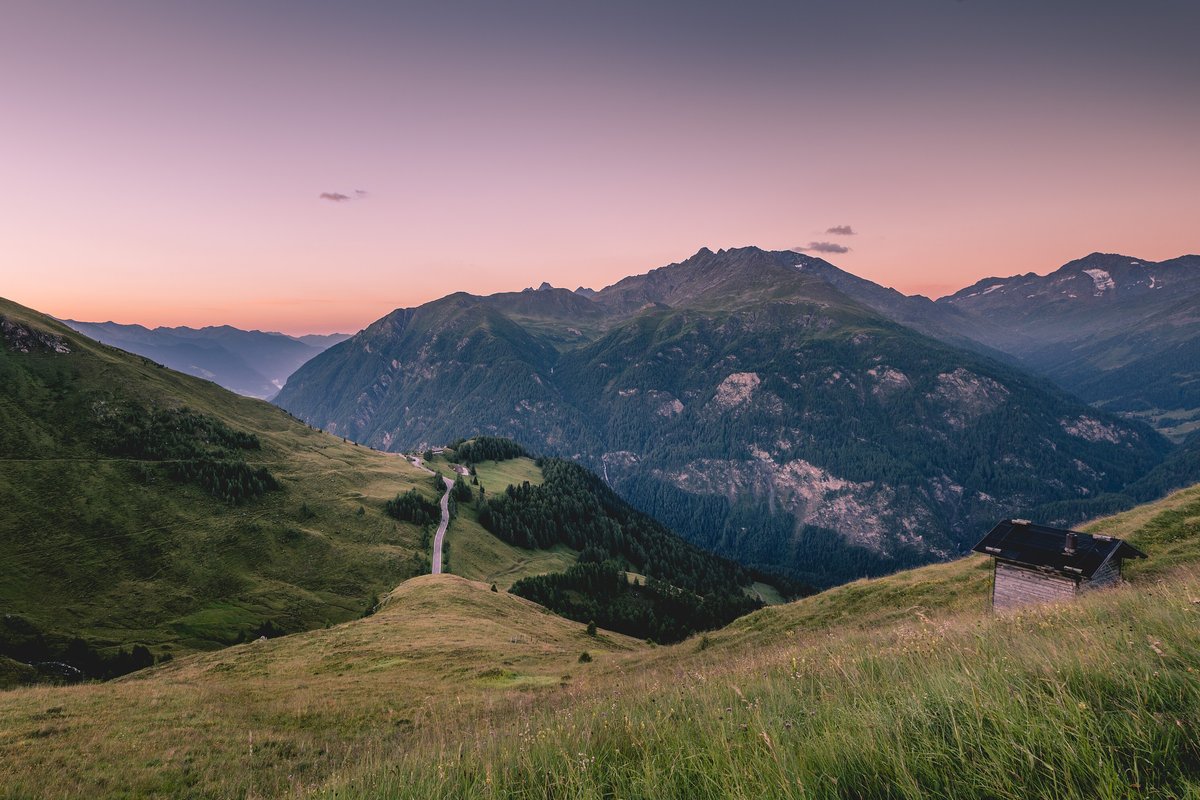
Some mountain roads are passes that happen to be beautiful. The Grossglockner High Alpine Road is the other way round: it was built to be looked at. Conceived in the depths of the interwar years and opened in August 1935, it crosses the Hohe Tauern between Bruck in Salzburg and Heiligenblut in Carinthia, and it was laid out from the beginning as a scenic route rather than a short cut. That intention is still obvious today, in the generous viewpoints, the careful stone walls and the sense that someone thought hard about where the driver would want to stop.
A road with a purpose
The engineer behind it, Franz Wallack, and the Salzburg governor Franz Rehrl made the first crossing by car in 1934, a year before the official opening. The opening itself was marked with an international motor race, which tells you something about the spirit of the place. It remains a toll road, and it is the highest surfaced pass road in Austria, topping out at the Hochtor at 2,504 metres, where the road slips through a short tunnel across the main Alpine divide.
Go early, and go in season
This is a high-mountain road, and it closes for the winter. Snow clearing is done each spring, and the opening and closing dates move with the weather, so check the operator's own information before you plan around it. In summer the road is popular with coaches, motorcyclists and cyclists alike. Arrive at the toll station as close to opening as you can manage and the first hour is quite different: cool air, long shadows across the meadows, and stretches of the climb without another car in sight.
Which way to drive it
From the north, the climb out of Ferleiten is the more dramatic approach, a long, steady ascent through numbered hairpins with the valley falling away behind you. Climbing this way also puts the best of the views ahead of you on the way up. From the south, out of Heiligenblut, the road is gentler at first, with the village church and its slender spire making a fine starting point.
The detours worth taking
Two short branch roads make the day. The first leaves the main road at the Fuscher Törl and climbs a cobbled spur to the Edelweissspitze, at 2,571 metres the highest point you can reach by car on the route. It is narrow and steep, and the view from the top is the reward for taking it slowly.
The second runs west to the Kaiser-Franz-Josefs-Höhe, named after the emperor's visit with Empress Elisabeth in 1856. From here you look across to the Grossglockner itself, Austria's highest mountain, and down onto the Pasterze glacier. It is the busiest stop on the road, which is another argument for arriving early.
How to drive it well
The hairpins are tight and the road is shared, so patience is the whole technique. Brake before the turn rather than in it, leave room for the coach that needs the full width, and use a lower gear on the long descents to spare the brakes. Give cyclists plenty of space; many are climbing at the very edge of their endurance. On a road like this, the pleasure is in the rhythm, not the pace.
Making a day of it
The Grossglockner is best treated as the centrepiece of a day rather than something to be crossed on the way elsewhere. Stop at the viewpoints, take lunch at altitude, and allow time to descend without hurry. Paired with a night in the valley on either side, it becomes one of those drives that stays with you long after the car has been returned.
If you would like a road like this woven into a journey of your own, Renisetté plans bespoke tours around the drives that matter to you.