
The Douro, by the river road
Régua, Pinhão and the slow, rewarding miles of Portugal's port country.
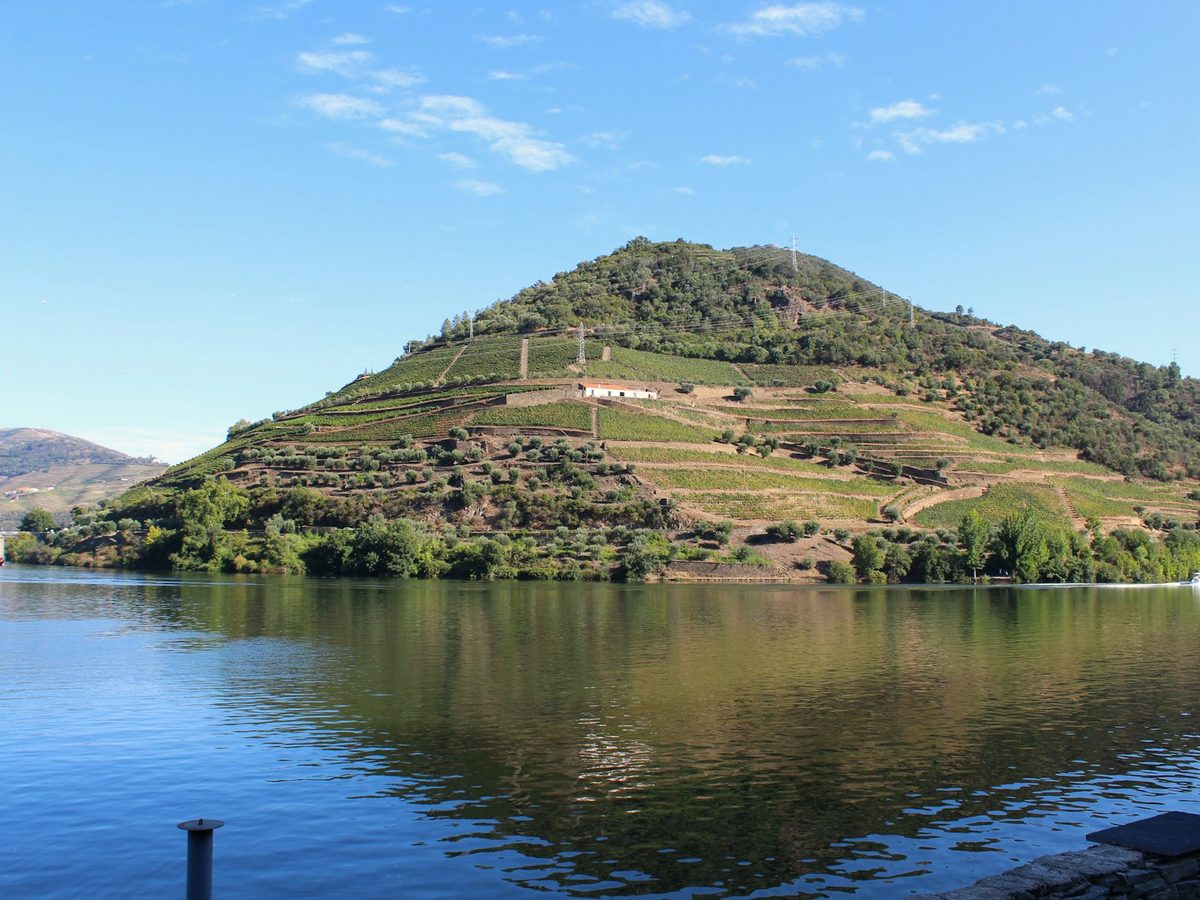
Leave Porto heading east and the city falls away surprisingly quickly. In little more than an hour the motorway gives way to a landscape that looks almost too deliberate to be real: hillsides cut into terraces from the water's edge to the skyline, schist walls holding up row after row of vines, and the Douro turning slowly through the middle of it all.
A landscape made by hand
This is the Alto Douro Wine Region, inscribed on UNESCO's World Heritage List in 2001 as a cultural landscape shaped by centuries of winemaking. It is also, by most accounts, the oldest demarcated and regulated wine region in the world. A royal charter of 1756, issued under the Marquis of Pombal, set out where port could be made, and granite boundary markers were placed across the hills the following year. A few of them still stand.
What makes the valley remarkable from behind the wheel is the scale of the work. The terraces were built and rebuilt by hand over generations, and the roads have had to find their way around them. Very little here runs straight.
Régua to Pinhão
The stretch most drivers come for is the N222 along the south bank between Peso da Régua and Pinhão. It runs for about 27 kilometres, close to the river for much of the way, with the railway on the opposite bank and the vineyards climbing steeply on both. Infraestruturas de Portugal, which looks after the road, counts 93 bends along that section. A car hire company once named it the best driving road in the world, which is a marketing claim rather than a measurement, but few who have driven it would argue very hard.
It is not a road for hurrying. There are coaches in season, tractors at harvest and the occasional cyclist, and the best of it is the rhythm rather than the pace. Taken early in the morning, with the river still and the light low across the terraces, it is about as good as touring gets.
Stopping properly
Pinhão sits at the heart of port country, where the River Pinhão joins the Douro. Its railway station is worth a few minutes for its blue-and-white azulejo panels, two dozen of them, put up in the late 1930s and showing the harvest, the vineyards and the rabelo boats that once carried the wine downstream.
The views from above are better still. The viewpoint at Casal de Loivos looks straight down on Pinhão and a long bend of the river; São Leonardo de Galafura, high above Régua, is the one the poet Miguel Torga wrote about. Both are reached by narrow lanes that reward a smaller car and a patient driver, and both are at their best late in the day.
Where to stay
The right base in the Douro is a quinta rather than a town hotel, somewhere above the river where the evening can be spent without reaching for the keys. Torel Quinta da Vacaria, at Vilarinho dos Freires near Régua, is a fine example. The estate's winemaking history goes back to the early seventeenth century, when it passed to the Jesuits, and its vineyards run along the Corgo and the Douro. It opened as a hotel in 2024.
When to go
Harvest, from September into October, is the most celebrated season, and also the busiest. Early summer has a quieter appeal: the vines are green, the evenings long and the roads a little calmer. From the Douro, the obvious way on is south, into the higher, emptier country of the Serra da Estrela.
The Renisetté Portugal Grand Prix Supercar Tour spends a night here, at Torel Quinta da Vacaria, before turning south towards the mountains. The tour, 14 to 21 June 2027, is on renisette.com.