
The Algarve, by the wild coast
South from Comporta along the Atlantic edge, over the Monchique hills and down to the cliffs at Porches.
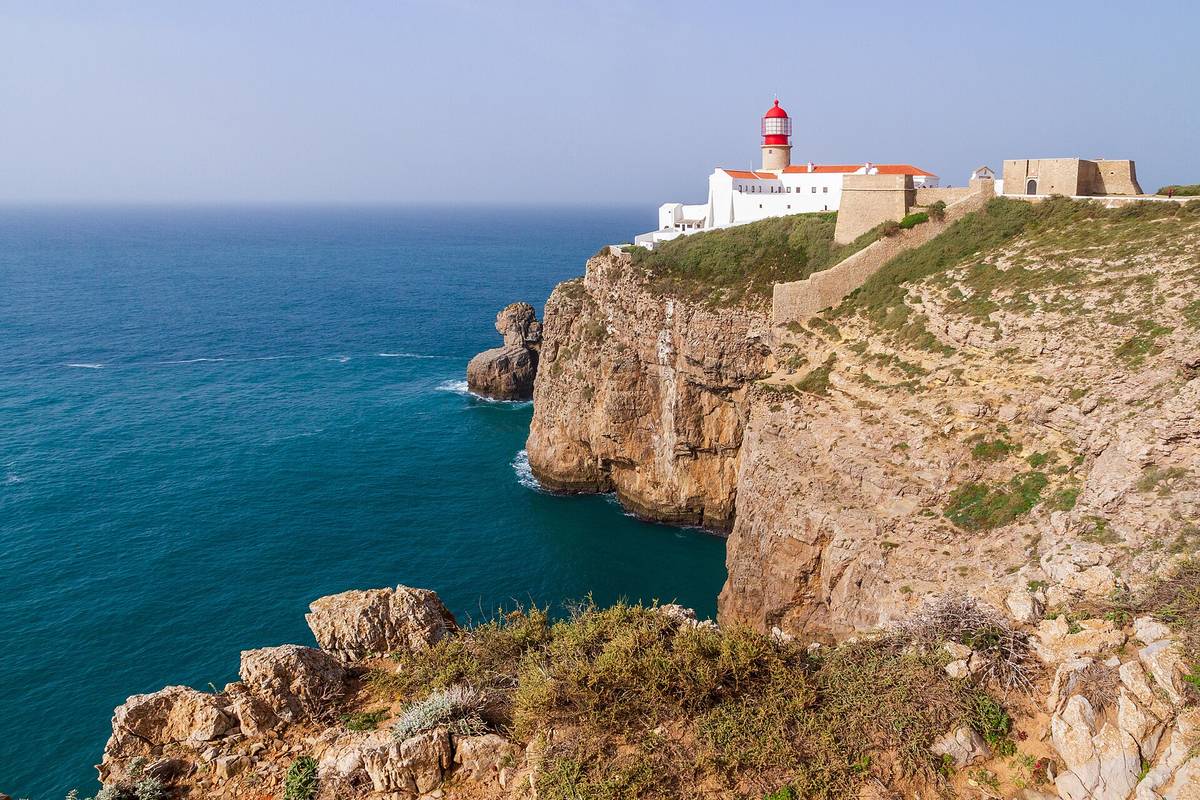
Photo: Matthias Süßen, via Wikimedia Commons, CC BY-SA 4.0
Most people meet the Algarve at Faro airport and see it first through the window of a transfer. The better introduction is the slow one, arriving from the north by the Atlantic coast, so that the light changes and the land dries and softens over the course of a day. From Comporta, that is exactly the road on offer.
Down the Alentejo coast
The road south leaves the pines and rice fields behind and runs through open, thinly peopled country towards Sines, the port town where Vasco da Gama was born. Beyond it the coast becomes protected land: the Parque Natural do Sudoeste Alentejano e Costa Vicentina, which runs south from near Sines to the far end of the Algarve and keeps one of the least developed stretches of shoreline in southern Europe.
The villages along the way are small and unhurried. Vila Nova de Milfontes sits at the mouth of the River Mira, whitewashed and calm, with a beach on the estuary and another on the open sea. Further on, the lighthouse at Cabo Sardão stands on cliffs where white storks nest on the rock stacks, an unusual sight on a sea coast. Lunch here is simple and very good: grilled fish, bread, a cold white from the Alentejo, and nobody in any hurry to bring the bill.
Into the Algarve
At Odeceixe, the little Seixe river marks the border, and the road crosses into the Algarve. It does not feel like the Algarve of the postcards. The western coast is wilder and greener, the beaches set at the foot of high cliffs and approached down winding lanes. Aljezur, with the ruins of its Moorish castle above the town, is the place to pause.
Those with the time can carry on to the end of the land. Cape St Vincent, the south-western tip of mainland Portugal, is a bare headland with a lighthouse, a long view and a wind that rarely drops. Sagres, a few minutes away, has its clifftop fortress and a reputation as the edge of the known world, which for a long time it was.
Over the hills
The more rewarding drive, though, turns inland into the Serra de Monchique. After the coastal plain it is a welcome change: cork oak, eucalyptus and chestnut, cooler air and a road that climbs in long, well-made curves. Fóia, the highest point in the Algarve at 902 metres, looks south across the whole coast to the sea on a clear day. Just below the town of Monchique, the spa village of Caldas de Monchique has been drawing visitors to its thermal waters since Roman times, and makes a gentle place to stop for coffee under the trees.
From the hills, the road falls away towards Portimão and the coast, and the circuit itself is never far off, set in the hills inland from the town.
Vila Vita Parc
The journey ends on the cliffs at Porches, near Armação de Pêra, about twenty to twenty-five minutes from Portimão. Vila Vita Parc is a five-star resort spread across gardens above the sea, with paths down to the beach below and enough space that it never feels crowded. Porches itself is known for its hand-painted pottery, and the sea caves at Benagil, among the most photographed sights on the coast, lie a short distance along the shore.
It is a fitting place to arrive after a week on the road: a long swim, an early dinner and a proper night's sleep before the noise of a Grand Prix weekend.
The Renisetté Portugal Grand Prix Supercar Tour spends three nights at Vila Vita Parc for the race weekend at Portimão. The tour, 14 to 21 June 2027, is on renisette.com.