
Preparing a car for a long tour
The quiet work that happens before the first mile.
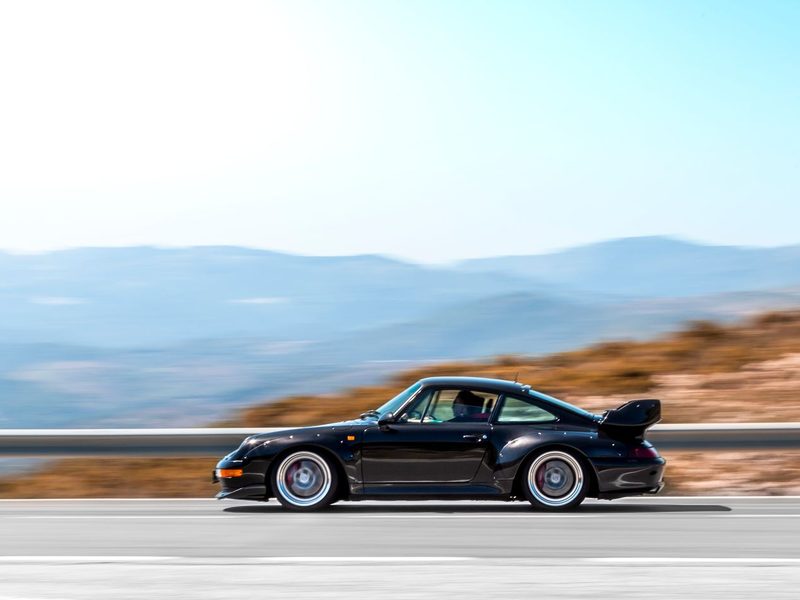
A long drive across Europe is one of the great pleasures of owning a fine car. It is also the moment when small, neglected things make themselves known, usually on a mountain pass or a Sunday afternoon far from a specialist. Most of the preparation is unremarkable. That is rather the point.
Start with the specialist
Book the car in with the people who know it, well before departure rather than the week before. Ask for a proper look at the things a long tour asks most of: brakes, tyres, cooling, fluids and the battery. Mention the route. Several days of steep descents ask something quite different of a car than a summer of short runs to lunch.
Leave time for parts. On low-volume cars, a pad, a sensor or a particular tyre can take longer to arrive than anyone expects.
Tyres deserve their own conversation
Check the age of the tyres as well as the tread, since rubber hardens with time even when the car has barely moved. Consider the weather you are likely to meet. A tyre that is perfect for a dry circuit day may be less happy in Alpine rain or an early-morning frost at altitude. Your specialist will have a view on what suits the car and the season.
If the car has no spare, as many modern performance cars do not, find out what the manufacturer supplies instead, and make sure it is in the car and in date.
Paperwork, in one folder
Gather the registration document, insurance details, breakdown cover and any service records you might need abroad, and keep copies somewhere other than the glovebox. Confirm with your insurer and breakdown provider that the car is covered in every country on the route, and that the cover suits a car of its value. Some policies treat high-value vehicles differently, and it is better to learn that at home.
Rules on what a car must carry vary from country to country and change from time to time. Check the current requirements for each country you will pass through, using official sources, rather than relying on last year's list.
Pack for the car, not only for yourself
Luggage space in a supercar is rarely generous, and soft bags fit where hard cases will not. Think about where things will sit when the car is cornering with some enthusiasm. A short list of useful items usually earns its place: a tyre pressure gauge, a microfibre cloth, a battery conditioner for longer stops, and the car's own charging lead if it is a hybrid.
Plan the stops around the car
Long tours go best when the overnight stops have been chosen with the car in mind. Secure, covered parking matters, as does an approach road that will not trouble a low front splitter. Fuel is worth a thought too. On quieter roads, stations can be further apart than the map suggests, and some cars are particular about octane.
After you arrive home
Once the tour is over, book the car in again. A post-tour check catches the stone chip that wants attention, the brake that has worked harder than usual and the tyre that picked up a nail on the last day. It also leaves the car ready for the next time, which is the best reason of all.
Or let someone else do it
Much of this disappears when a tour is arranged for you, with prepared cars, planned stops and support on the road. If you would rather simply drive, plan a bespoke tour with Renisetté, or look at our supercar tours.